The Bloomberg Gender-Equality Index and the Future of Workforce Standards
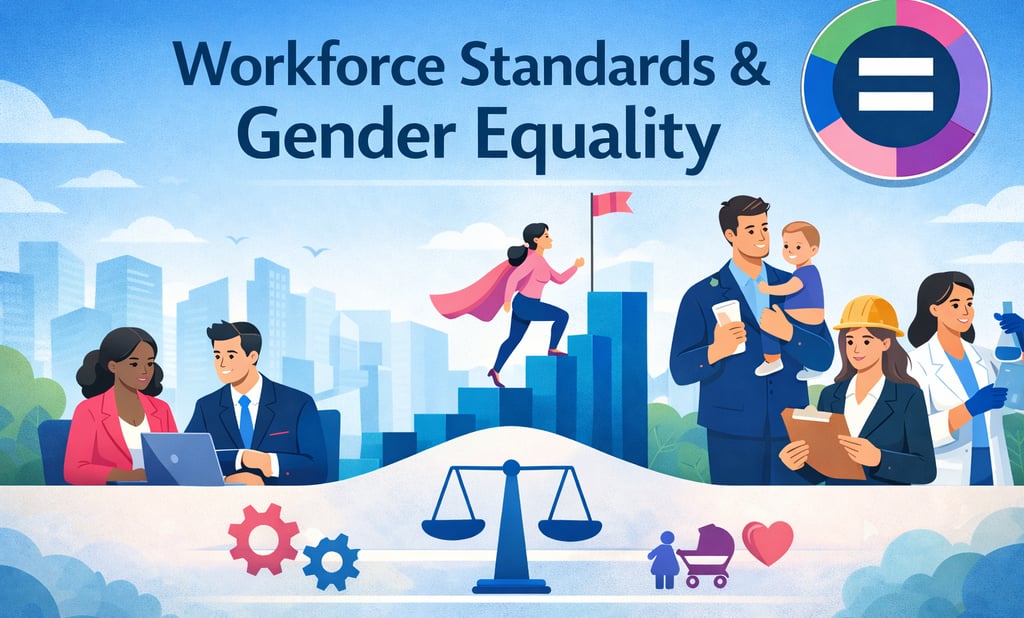
As organizations respond to increasing expectations around environmental, social, and governance priorities, gender equality has become a measurable and reportable business outcome rather than a general commitment. The Bloomberg Gender Equality Index is widely recognized as a benchmark that evaluates how companies disclose and structure their gender related practices and commitments.
Participation in the Bloomberg Gender Equality Index is voluntary and based on company submitted data alongside publicly available disclosures. The index focuses on transparency, policies, and reported metrics rather than independently verified outcomes, making consistent internal data and reporting systems essential.
For many organizations, the challenge is not understanding such frameworks but applying their underlying principles consistently across different markets and employment structures. This is where workforce strategy and execution become critical.
Understanding the Bloomberg Gender Equality Index
The Bloomberg Gender Equality Index evaluates participating companies using a structured set of key performance indicators. These indicators assess how organizations embed gender equality into leadership, workforce composition, compensation practices, workplace policies, and external communication.
While the exact methodology is defined by Bloomberg, the framework generally reflects several key areas.
Leadership representation
One of the clearest indicators of gender equality is representation at the leadership level. This includes the participation of women on boards, in executive roles, and across decision making bodies.
This area reflects whether gender equality is integrated into governance structures rather than addressed through isolated initiatives.
Talent pipeline and workforce composition
The index considers how organizations build and sustain gender diversity across the workforce. This includes representation at different levels, hiring and promotion patterns, and retention outcomes.
These indicators help assess whether companies are developing a consistent and sustainable pipeline of talent over time.
Pay equity and accountability
Compensation practices are a central component of evaluation. Companies are expected to analyze and disclose gender pay gaps using structured methodologies and to demonstrate actions taken to address any identified disparities.
Accountability mechanisms, including leadership oversight and formal action planning, are also considered in the evaluation process.
Inclusive culture and workplace policies
Workplace structures that support inclusion are another key focus. These may include parental leave policies, flexible work arrangements, employee support programs, and training related to bias and harassment prevention.
These elements indicate whether inclusion is reflected in day to day work experiences and organizational culture.
External transparency and commitment
Beyond internal practices, companies are evaluated on how they communicate their commitment to gender equality externally. This includes public disclosures, reporting practices, and how gender equality is reflected in corporate communications and employer branding.
From framework to execution
Frameworks such as the Bloomberg Gender Equality Index provide direction, but many organizations face challenges in applying these standards across multiple countries. Differences in labor regulations, compensation structures, and workforce models can make consistent implementation complex.
This is particularly relevant for companies managing distributed or international teams.
Supporting workforce implementation across markets
At Nextsphere Strategic Management Services, gender equality is approached as part of workforce execution rather than reporting alone. The focus is on helping organizations operationalize workforce practices in a way that is consistent, compliant, and measurable across different jurisdictions.
Workforce data and visibility
Accurate workforce data is essential for tracking progress. Structured reporting on hiring, promotion, and retention patterns enables organizations to make informed and evidence based decisions.
Compensation alignment across markets
Addressing compensation equity across multiple countries requires alignment with both market benchmarks and local regulations. Structured approaches to compensation can help organizations analyze and manage potential disparities.
Local implementation of global standards
Global workforce standards require local execution. Employment contracts, workplace policies, and compliance measures must reflect both international expectations and country specific legal requirements.
Supporting ESG related reporting
As organizations increasingly report on workforce related metrics, the need for consistent and reliable data becomes more important. Structured workforce systems support transparency and alignment with widely used reporting frameworks, including those referenced by global indices.
The future of workforce standards
Workforce standards are increasingly defined by measurable and disclosed outcomes. Gender equality is assessed through data, accountability, and consistent execution across all levels of the organization.
Benchmarks such as the Bloomberg Gender Equality Index reflect how expectations are evolving for organizations and how workforce practices are evaluated by stakeholders.
Organizations that implement structured and consistent workforce practices are better positioned to attract talent, respond to stakeholder expectations, and support long term sustainability.
Nextsphere perspective
Global benchmarks provide direction, but implementation happens at the level of employment. Organizations require systems and partners that can translate high level standards into consistent practices across different markets.
Nextsphere focuses on supporting structured workforce operations that enable organizations to align internal practices with evolving global expectations while ensuring compliance and operational consistency.
The Bloomberg Gender Equality Index reflects a broader shift in how organizations are evaluated. Gender equality is increasingly defined not only by intention but by measurable and disclosed practices.
For companies operating globally, the ability to apply consistent workforce practices across different markets is becoming a core capability. With the right infrastructure and approach, organizations can align with global standards and strengthen their position in the evolving future of work.

Address
Santa Arcadia, Cabanatuan City, Nueva Ecija, Philippines
Solutions
Careers
Advisories
Terms of use
Resources
Contact us